

 Key Findings
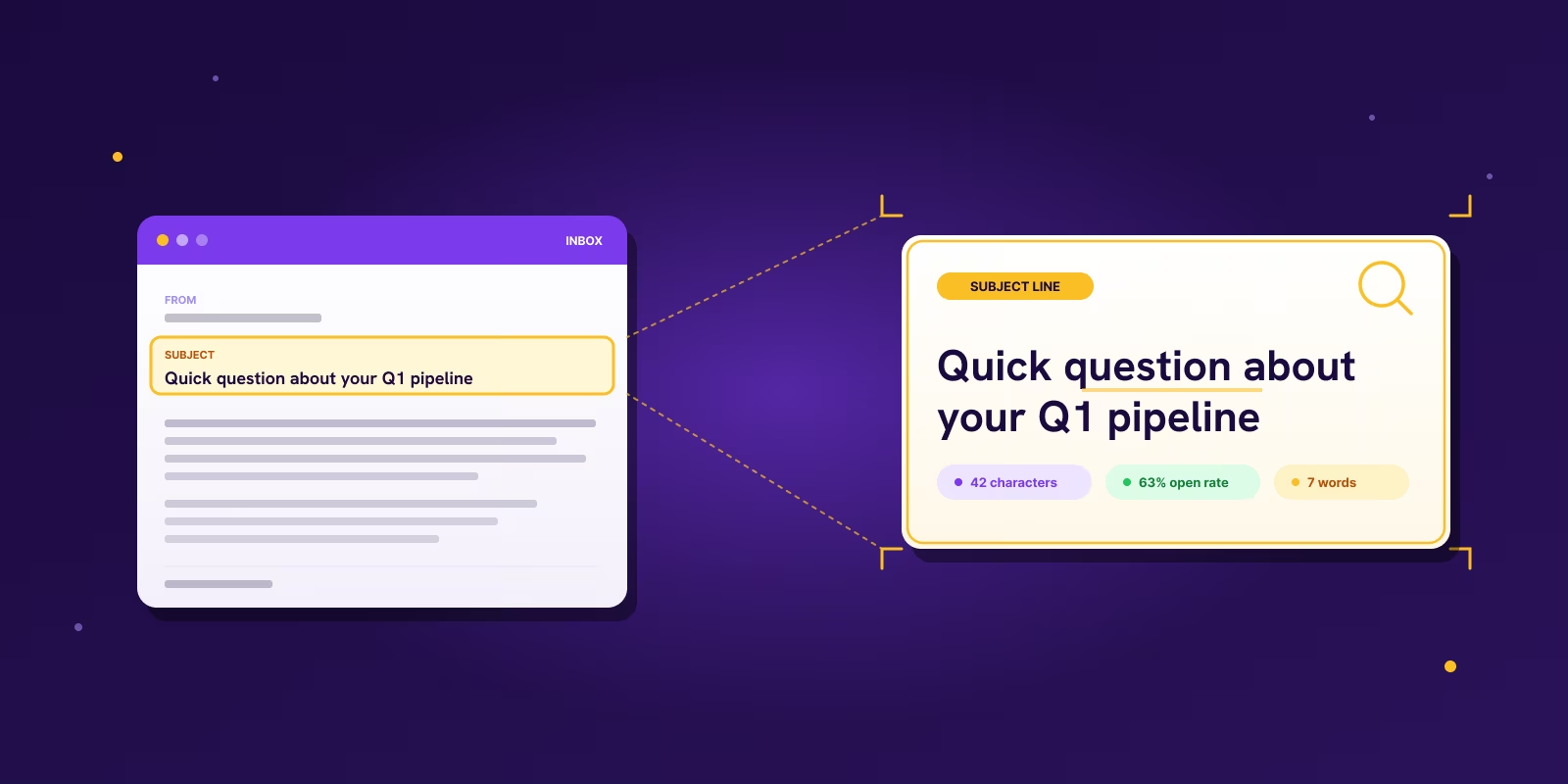
Mobile previews crop at roughly 35 characters. Anything longer gets cut off mid-sentence and reads like a campaign. Five words is enough to earn the open without giving up the sale.
Subject lines anchored to a real account signal (funding round, hiring spike, leadership change) outperform clever wordplay every test we have run. The signal does the personalisation in the first second.
Day 1 opens. Day 3 reframes. Day 5 asks. Day 8 routes. Day 12 closes. Reusing one subject line shape across the whole sequence is the most common cold outbound mistake.
Apple Mail Privacy Protection and Outlook prefetchers make opens unreliable. 200 to 300 sends per variant, hold every other variable constant, track positive replies. Eight percent positive reply rate is the floor.
On a 0% reply campaign, check infrastructure, then subject line, then length, then tone, then offer. Subject line is the cheapest of the five to fix. It is rarely the actual problem.
Every blog on the first page of Google tells you to write "Quick question."
The AI Overview at the top of the SERP says the same thing. So does the YouTube video below it. So does Reddit. After 1,000+ outbound campaigns, we can tell you what that means: prospects have seen "Quick question" three times this morning. It is the most ignored subject line in B2B. The advice stopped working when it became the default.
A cold email subject line in 2026 has two jobs. Earn the open. Survive the filter. Most teams write for the first one and lose the second one. That is why new clients come to us with 20% open rates on polished copy that never books a meeting.
This guide is the system we use to write subject lines for client campaigns at Reachly. The same system that helped Primal hit 4.57x ROI and helped The Great Room close a $250K contract. Short answer up front, then the rules, then 17 subject lines you can lift, then how to map them across a real sequence.
TL;DR: Summary
- Keep the subject line to 1 to 5 words. Mobile previews crop at about 35 characters on iPhone Mail and 40 on Gmail.
- Anchor the line to a real account signal. Signal-based lines have produced the highest reply rates on Reachly campaigns.
- Ten formulas cover almost every line worth sending. Pick the formula from the situation, not from the line you like best.
- Match the line to the sequence step. Steps two and three stay in the original thread with no new subject.
- Pair every subject line with deliberate preview text. The two are read together, and most senders leave the preview to chance.
- Judge subject lines on replies, not opens. Open rate stopped being trustworthy once Apple Mail Privacy Protection began pre-fetching images.
- Reachly writes and tests these lines as a managed service. See our cold email agency page.
What makes a cold email subject line work in 2026
The shortlist is five things, in this order.
One, it has to be short. Mobile previews crop at roughly 35 characters on iPhone Mail and 40 on Gmail. If the prospect cannot read the full subject from their notification, you have already lost half the open you would have gotten.
Two, it has to read like a peer wrote it. Anything that reads like a sales rep template gets ignored. Curiosity bait, ALL CAPS, brackets, emoji, marketing copy. All of it gets cut.
Three, it has to tell the truth. The subject line and the first sentence of the email have to match. Mismatched subject lines train prospects to delete you, and they tank your sender reputation when prospects mark you as spam after opening.
Four, it has to be anchored to something specific about the prospect. A signal beats clever. "Series A and hiring 6 reps" outperforms "growth play" every time we test it.
Five, it has to survive Gmail and Outlook filtering. Spammy phrases, hyped offers, money signs, and exclamation marks send you to the promotions tab in 2026 even if every other infrastructure piece is clean. If your cold email deliverability is shaky, subject line choice is the second-fastest way to make the problem worse.
Hit all five, the open rate becomes a non-issue. Miss one, the rest of the email does not matter.
The 1-to-5 word ceiling and why most teams miss it
Every test we have run says the same thing: 1 to 5 words is the sweet spot.
Past that, two things happen. The mobile preview cuts you off mid-sentence, and the inbox starts to read like a campaign. A five-word subject line looks like a coworker forwarded something. A nine-word one looks like a newsletter. Prospects scan the from-name and the first three words before deciding to open. Five words is more than enough room to give them a reason.
The rule is harder to follow than it looks. Most reps write 9-word subject lines because they are trying to pre-sell the offer. The discipline is to leave the pre-sell for the body and let the subject do one job only: earn the open.
There is one exception. Account-named subject lines can run a word longer because the account name is doing the personalization work for you. "Series A and Acme Corp" reads as relevant even at 4 words plus the name. Hold the rest to the ceiling.
17 cold email subject lines that book meetings
These are pulled from live client campaigns we have run in the last 12 months. Lift them, swap the brackets, adapt to your offer. Five categories, the ones that consistently outperform.
| Subject line | Category | When to use |
|---|---|---|
| {{company}} hiring 3 SDRs | Signal | Headcount growth trigger |
| Series A and {{company}} | Signal | Funding announcement, first 6 weeks |
| {{first_name}}, {{competitor}} just shipped | Signal | Competitive move, urgency without hype |
| Saw your {{topic}} post | Signal | LinkedIn engagement trigger |
| {{first_name}}, quick read | Direct | Day 1 default when no signal is available |
| 3 things on {{company}} | Direct | When the email itself is a 3-bullet diagnostic |
| Skip if not relevant | Direct | Day 5 or 8 follow-up, gives an easy out |
| Idea for {{company}} | Value | Strong when the body opens with a specific play |
| {{metric}} at {{company}} | Value | When you can name a number they care about |
| Reply or close the loop? | Value | Day 12 bump, last email in the sequence |
| {{first_name}} - {{mutual_name}} | Mutual ground | Real warm intro, never fabricated |
| Met you at {{event}} | Mutual ground | Real event, real handshake |
| {{company}} + {{your_company}} | Mutual ground | When you have a credible reason to pair |
| One question, {{first_name}} | Question | Better than "Quick question" because it commits to one |
| Wrong person? | Question | Day 8 routing email, often forwarded internally |
| {{first_name}}, worth 10 min? | Question | Day 5 ask with a defined time |
| About your {{trigger}} | Question | Curiosity grounded in something specific, not bait |
A few patterns worth pointing out. Every signal-based subject line is anchored to a fact about the prospect, not a feature about you. Every direct subject line is short enough that the prospect can read it in a half-second glance. Every question subject line commits to one specific thing. No "Quick question" without a noun.
Map subject lines to your sequence, not just to "first touch"
The biggest mistake we see in cold outbound is teams writing one good subject line for the first email and then reusing the same shape for follow-ups. Day 1 and Day 8 do different jobs. Their subject lines should too.
For what goes inside that second email, see the cold email follow up guide.
The Reachly standard sequence runs across cold email, LinkedIn, and cold calling. Subject lines change by stage because the reader's context changes by stage. By Day 8, they have seen your name twice. By Day 12, you are closing the loop, not opening it.
| Day | Step | Subject line shape | Why this works |
|---|---|---|---|
| Day 1 | Email #1 (signal opener) | {{company}} hiring 3 SDRs | Signal-anchored, 4 words, earns the open on relevance |
| Day 3 | Email #2 (new angle) | 3 things on {{company}} | Different angle from Day 1. Restating Email #1 is what kills follow-ups |
| Day 5 | Email #3 (one proof) | {{first_name}}, worth 10 min? | Defined ask. Direct without being aggressive |
| Day 8 | Email #4 (bump, easy out) | Wrong person? | Often forwarded to the actual buyer internally |
| Day 12 | Email #5 (close the loop) | Reply or close the loop? | The shortest in the sequence. Signals you will stop if they want |
How Reachly coordinates this at the campaign level: one ops lead owns infrastructure, one strategist owns sequence design, every subject line passes a 5-word check and a deliverability filter before it ships.
The same logic applies if you only run email and skip the multichannel piece. Day 1 earns the open. Day 3 reframes. Day 5 asks. Day 8 routes. Day 12 closes. Subject lines follow the job, not the sender's mood.
If you want the full sequence framework, the modern outbound sales strategy post covers how email, LinkedIn, and cold calling fit together.
Signal-based subject lines beat clever ones
The strongest subject lines on a B2B campaign are the boring ones built on real account signals.
A signal is a fact about the prospect that gives you permission to email. Funding rounds. Hiring spikes. Leadership changes. Product launches. Tech stack moves. Page-1 ranking gaps. A subject line built on one of these reads as relevant in the first second. A subject line built on cleverness reads as a campaign.
Here is a real example from a client campaign last quarter.
Hi {{first_name}}, congrats on the round. Most B2B teams coming out of Series A end up with their outbound 6 months behind their hiring plan.
We run signal-based outbound for teams in a similar spot. One of our clients hit 8% positive reply rate in month 1 by anchoring every first touch to a real account signal.
Worth 15 minutes this month to see if it fits?
The subject line is 4 words. The body is 65 words. The signal (recent funding) does the personalization. The offer is concrete. The ask is defined. None of that works without the signal.
Workflows we use to pull signals across a whole list: Clay for funding rounds, headcount growth, tech stack changes, and LinkedIn engagement, then Smartlead for sending the campaigns segmented by signal strength. The full operating model lives in our signal-based outbound playbook.
The shelf life on a signal is 2 to 4 weeks before every competitor has the same data. Speed of activation matters more than cleverness of copy.
Subject lines that get filtered (and what to write instead)
Gmail and Outlook bulk-sender rules tightened in 2024 and again in 2026. A subject line that worked in 2023 can land you in the promotions tab now even if your authentication and warmup are clean.
The patterns that get filtered are predictable. The fix is to write boring subject lines that look like normal business correspondence.
| Cut this | Why it fails | Write this instead |
|---|---|---|
| FREE consultation for {{company}}!! | All caps, exclamation, "free" trigger | Idea for {{company}} |
| 🚀 Boost your pipeline 10x 🚀 | Emoji, hype, unverifiable claim | {{metric}} at {{company}} |
| Re: our conversation | Lie. Trains prospects to mark as spam | About your {{trigger}} |
| Quick question | Most overused 2-word subject line in B2B | One question, {{first_name}} |
| $$$ Save on {{service}} $$$ | Money signs, financial-spam shape | Skip if not relevant |
| [ACTION REQUIRED] Read now | Brackets, urgency bait, manipulative | Reply or close the loop? |
| Hey there! | Generic, looks like a template blast | {{first_name}}, quick read |
The pattern is consistent. Anything that looks like a marketing email gets filtered like one. Anything that looks like a peer wrote it lands in the primary inbox. Mailbox providers are getting more aggressive on this every year, not less.
For the full infrastructure layer that determines whether your subject line choice even matters, our email deliverability guide covers SPF, DKIM, DMARC, warmup, and the rest.
How to test cold email subject lines without trusting opens
Open rate is the noisiest metric in B2B outbound. Apple Mail Privacy Protection prefetches images, so every iPhone user looks like they opened your email whether they did or not. Outlook's link prefetcher inflates clicks. If you A/B test by opens, you are testing the wrong thing.
Test by reply rate instead. That is the metric mailbox providers actually look at when deciding whether to trust your sender reputation.
The variant test rules we use on client campaigns:
- 200 to 300 sends per variant. Smaller than that and the noise eats the signal.
- Hold every other variable constant. Same body, same CTA, same audience segment, same day of week. Change only the subject.
- Run for at least 5 business days. Reply patterns settle over time as the bump emails go out.
- Track positive replies, not all replies. A 20% reply rate of "unsubscribe" tells you nothing.
- Stop comparing winners across audience segments. A subject line that wins for VC-backed SaaS will lose for bootstrapped agencies.
The benchmark we use as a floor is 8% positive reply rate. Below that, the subject line probably is not the problem. Above that, you are in the band where small subject line changes start to matter. Our cold email best practices post covers the full reply-rate diagnostic if your numbers are sitting lower.
If reply rate is the output, the subject line is one of five inputs. Length is another. The 70 to 80 word email rule is the constraint that makes everything else tighter.
How Reachly writes subject lines for clients
We have shipped subject lines across 1,000+ campaigns. The pattern that consistently outperforms is signal-based, 1 to 5 words, mapped to sequence stage, with the body matching the subject promise in the first sentence.
Primal's campaign, the one that hit 4.57x ROI and signed 6 deals in 6 months, ran subject lines averaging 3.8 words on first touches. Eight percent positive reply rate in month 1. The Great Room's coworking campaign, which closed a $250K contract and pushed face-to-face meetings from 2 per quarter to 2 per month, ran subject lines averaging 3.2 words with account-named signal anchors on roughly 60% of first touches.
Not having an offer is the biggest mistake every B2B company makes in cold outbound. The subject line is the second one. CEOs get cold emails every other day, and most of those subject lines read like they were written by a robot at 2am. A 3-word subject line that names something real about the prospect outperforms a clever 9-word one every single time we test it.

The work we hand to clients is operational. Pulling the signals. Writing 5 to 7 subject line variants per segment. Running the reply rate tests. Cutting losers fast. Rotating winners before they fatigue. None of that is glamorous, and most internal teams do not have the bandwidth to keep it running every week.
That is the part we own when teams hand outbound to us. The signal-based outbound playbook covers the full method. The automated follow-ups post covers how sequence pacing affects subject line performance across the 12-day window.
Which subject line formula should you use, and when?
Ten formulas cover almost every cold email subject line worth sending. Each one below names the situation it suits, the shape of the line, and the failure mode that shows up when it is used in the wrong place. Pick the formula from the situation, not from the line you like best.
1. The Curiosity Gap / Question Format
Question subject lines earn opens because they create tension around a problem the buyer already has.
That only works when the question is anchored to a real signal. Otherwise it reads like spam with a question mark slapped on top. Founders and SDR managers should treat this format as a trigger-based tool, not a creativity exercise. If your Clay table shows hiring, funding, territory expansion, a new sales leader, or a recent stack change, you have the raw material for a strong question subject line.
Subject lines to test:
hiring sdrs fast enough?Fires when the account has 3+ open SDR roles
ready for apac pipeline?Fires on a new APAC office announcement
new vp sales. same outbound?Fires within 60 days of a new sales leader hire
enough ramp coverage for q3?Fires when headcount is growing faster than sequences
why did demo volume stall?Fires when public signals show a slowdown in activity
is pipeline keeping up?Fires after a funding round or growth milestone
These work because the buyer can feel the context. The question is specific enough to sound researched, but open enough to pull them into the email. Skip empty fillers. "Quick question" says nothing. "Can I help?" says even less.
Use this format early in a sequence when the pain is obvious but not yet urgent. If the signal is weak, do not force it. Curiosity without context feels manipulative, and discerning buyers spot that instantly.
2. The Social Proof / Authority Reference
Social proof gets opens only when the reference is earned.
Founders and SDR leaders do not care that you can type a famous logo into a subject line. They care whether the example maps to their situation. The job is to reduce risk fast. Show that a similar company, at a similar stage, with a similar trigger, already faced the same problem.
Subject lines to test:
how the great room added $250kUse when the account matches the Great Room's profile: premium coworking, APAC expansion
what primal did before hiring an sdrUse when the account is agency-shaped and scaling paid acquisition
how series b saas teams fix reply ratesUse when the prospect is a funded SaaS at similar stage
what apac sales teams changed last yearUse for regional expansion plays
how 8 b2b agencies rebuilt outboundUse when peer-group comparison is sharper than a single logo
Reference a peer group, category, or named customer only if the connection is real and the body of the email can support it. "how the great room added $250k" works because that case study is public and the details check out. "how primal hit 4.57x roi" works because the Primal case study is verifiable. If the claim needs explaining before it sounds honest, cut it.
This format is strongest with mature buyers who want precedent before they spend time on you. A founder at a funded SaaS will respond differently to "how series b teams handle outbound" than to a vague pitch about pipeline. Use it after you have enough account data to make the comparison sharp. If you want a benchmark for what performance actually looks like, our guide to cold email response rates frames what good looks like before you write the angle.
One warning. Do not fake familiarity. Do not imply a referral you do not have. The second it feels slippery, the open means nothing and the reply is gone.
3. The Specific Metric / Data Point
Specific numbers earn opens because they signal discipline. They tell the buyer this email is tied to a real scenario, not a generic promise blasted across a list.
That only works if the number is grounded in something the prospect would recognize. Hiring volume. Open headcount. Territory expansion. A timeline they just announced. A tech change your team picked up in Clay. If the metric feels detached from the account, it reads like bait.
Subject lines to test:
5 more meetings for the new reps?Fires when hiring volume is visible
10 to 40 sqls from partner outboundFires for partnerships or channel sales motions
3 inbox issues i noticedFires when public-facing deliverability signals are poor
30-day gap after the funding roundFires post-funding, when pipeline usually stalls
40% quota miss after scale hiresFires when scaling is outpacing enablement
$250k from one outbound sequenceWorks when pointing to a specific Reachly client outcome
Use this format when you have a real account signal and body copy that can support it. A founder who just raised will engage with "90-day pipeline gap" if your email connects that timeline to hiring plans, territory expansion, or a new GTM motion. Do not stuff outcome claims into the subject line. "2x pipeline" is weak unless you can prove the path, the context, and the baseline. Keep the number closer to the mechanism than the miracle.
If the number needs explanation before it feels believable, cut it.
4. The Personalization / First-Name + Specific Detail
This is the workhorse. Not because it is cute, but because it signals the email was not sprayed at a list of thousands.
Personalization still works. It just has to be real. First name alone can help, but first name plus a relevant company detail is stronger because it gives the buyer a reason to believe you know why they are in the sequence. Data from multiple B2B studies puts personalized subject lines at 43-46% open rates compared to roughly 35% without.
Subject lines to test:
maya, saw the sdr rolesName + hiring signal
dan, apac launch?Name + expansion cue
lisa, noticed the crm shiftName + tech stack signal
arun, on the new fundingName + recent event
priya, the product launchName + specific milestone
james, singapore office opening?Name + geography + active event
A common mistake is shallow personalization. "John, noticed you're at Company." That is not personalization. That is mail merge with extra steps.
Use one signal that changes the meaning of the email. Clay is built for this. Pull hiring velocity, recent job posts, new market pages, or tech stack changes. Then compress it into five or six words. Keep the body aligned. If the subject says "saw the sdr roles," the first line had better speak to team growth and pipeline pressure.
If it sounds like a scraped data point, rewrite it.
5. The Value Proposition / Benefit-Driven Direct Offer
Direct benefit subject lines work when the buyer already has a visible reason to care. Use them on warm-enough cold accounts. Skip them on broad, low-context lists.
This format is simple. State the outcome in plain English. Then make sure that outcome matches a real operating constraint you can observe.
Subject lines to test:
more pipeline without more repsFires on hiring-heavy accounts
outbound handled for your teamFires when execution gap is visible
more meetings from current trafficFires for efficiency-focused accounts
fill the calendar fasterFires on coverage problems
book meetings without hiring sdrsFires when headcount is frozen
pipeline, without the sdr salaryFires for cost-sensitive founders
What makes these work is context. A founder who just raised and is hiring AEs may respond to "more pipeline without more reps" because the signal behind it is obvious. An SDR manager with open headcount and missed coverage may care about "outbound handled for your team" because it speaks to execution, not vague ROI.
This is how strong outbound teams build subject lines in Clay and Smartlead. They do not write one clever benefit line and blast it across a market. They map a value proposition to a trigger set. Hiring data gets one offer. Funding gets another. Tech stack changes get a different angle. If you want to sharpen the value prop itself, this roundup of value proposition examples is a useful frame.
Keep the wording clean. "Demo," "free," "discount," and other promo-heavy terms make the email feel like a pitch before it earns attention.
One rule. If the subject promises a benefit, the first line of the email needs to prove why that benefit is relevant now.
6. The Trigger-Based / Event-Driven Subject Line
This is where modern outbound communication improves. You are not guessing at pain. You are responding to a visible event.
A trigger-based subject line tells the buyer why this email exists now. That is what makes it work. Timing creates relevance, and relevance gets opens.
Subject lines to test:
saw the ae hiringFires on hiring-related signals
after the funding roundFires within 30-60 days of a funding event
noticed the hubspot switchFires on tech stack changes
new market push?Fires on expansion announcements
saw the product launchFires on recent product releases
congrats on the promotionFires on executive job changes
The strongest signals are the ones that imply a change in demand generation pressure. Hiring SDRs usually means they need more meetings. A funding round often means faster growth targets. A new sales leader usually means new systems, new scrutiny, and a short window where fresh ideas get considered.
This format also fits how teams work in Clay and Smartlead. You enrich the account, tag the trigger, then swap in the matching subject line and opener. Normal outbound execution in 2026.
Do not over-explain the event in the subject. Keep it compact. The email body can handle the nuance. And make sure the signal is recent. Old funding news or stale hiring data makes you look sloppy.
7. The Scarcity / Limited Availability
Scarcity works when it is real. If it is not real, it backfires.
This format is better in follow-ups than first touches because it depends on some level of trust. On day one, "only two spots left" sounds like cheap pressure. On a later touch, if the buyer has seen your name before, it can give them a reason to act.
Subject lines to test:
april slots nearly fullUse in follow-ups when capacity is actually limited
may outbound windowUse when launch timing is tied to a real calendar
still want the june slot?Use as a reminder, not as first touch
holding this open?Use in follow-up after a click or partial reply
closing capacity for q3Use when agency capacity is a real constraint
Keep it grounded in actual delivery constraints. Agency capacity. Launch calendars. Time-sensitive territory pushes. If you are making the claim, your ops team should agree it is true.
What kills this approach is overuse. If every email sounds urgent, none of them are. Buyers learn your rhythm quickly. Use scarcity only when there is a genuine reason the timing matters to them and to you.
Also keep the language soft. "Last chance" and "urgent" are tired. "June launch window" feels operational, which is better.
8. The Collaborative / Problem-Solving Approach
This one is underrated, especially with experienced buyers who are tired of being sold.
A collaborative subject line lowers resistance because it frames the email as a working session, an exchange of notes, or a practical conversation. Not a pitch deck in disguise.
Subject lines to test:
compare outbound notes?Works for peer-level founder outreach
pipeline plan for q3Works for strategic, planning-focused buyers
worth pressure-testing?Works when you have a specific insight to share
one idea for apacWorks for regional-specific plays
mind if i share what we saw?Works as a follow-up after a signal-led first email
quick note on your sequenceWorks when you have something useful to actually share
This approach works best when you have deep market understanding and can bring something useful. Founders and sales leaders will spot fake consultative language instantly. If the subject says "compare notes" and the body is a hard sell, you lose trust fast.
The format is especially good when your service touches more than one channel. If your team handles email, LinkedIn, and calls, the problem is rarely just "write better copy." It is sequencing, segmentation, targeting, inbox placement, follow-up timing, and reply handling. A collaborative subject gives you room to speak like an operator instead of a vendor.
Use this more with senior buyers than with frontline managers. Leaders are often more open to a peer-style conversation than to direct offer language.
9. The Competitor / Comparative Reference
Competition gets attention. That is why this format works. But it can also make you sound cheap if you overdo it.
The right use of competitor language is not "your rival is crushing you." It is a sharper, calmer signal that a peer is making moves worth noticing. That creates urgency without sounding childish.
Subject lines to test:
your competitors are hiringFires when peer companies are scaling
why peers went multichannelFires when the industry is shifting outbound motion
others in saas changed thisFires when a category trend is visible
how you stack upFires for benchmark-driven conversations
[competitor] just launched outboundFires only when the competitor is recognizable to the prospect
while your peers expand apacFires on regional market plays
This format is strongest when the comparison is based on public, recent information. Hiring trends. New market moves. Role changes. Product launches. You are giving the prospect a market cue, not trying to provoke insecurity.
The subject line should open a loop the email can close. If you reference a competitor, explain the implication. Maybe peers are hiring SDRs but could cover the gap faster with an outsourced outbound motion. Maybe a similar SaaS company expanded into APAC and changed its sequencing. Make the comparison useful.
Do not name-drop a competitor unless the account will immediately recognize it. A random company name does not create relevance. A direct peer does.
10. The Fear / Risk Mitigation Reverse
Good buyers are skeptical. They should be. They have heard promises, hired agencies, tested tools, and been burned before.
That is why risk-reversal subject lines can work so well later in a sequence. You are naming the objection instead of dancing around it. Done right, that feels honest.
Subject lines to test:
burned by outbound before?Fires on accounts that have cycled through agencies
can't hire sdrs fast enough?Fires when hiring is stalled
worried about domain damage?Fires for deliverability-conscious buyers
another outbound miss?Fires on accounts with visible past outbound attempts
tired of vanity metrics?Fires for ops-focused leaders
outbound that doesn't hurt your domainFires for technical buyers who understand deliverability
This format is not for first touch in most cases. It works better after the buyer has seen your name once or twice. At that point, calling out the underlying fear can pull a response because it shows you understand the downside they care about.
Keep the fear specific. Do not stack objections in one line. Pick the one that matters most to that segment. Founders often care about wasted time and wasted spend. SDR managers often care about reply quality and operational mess. RevOps leaders may care about bad data and broken handoffs.
Do not sound defensive. Sound calm. "Worried about domain damage?" is stronger than "We promise we won't hurt your sender reputation." The first invites a conversation. The second sounds like you have something to hide.
If you use this angle, the email body needs proof, process, and safeguards. Otherwise the subject line opens the door and the body slams it shut.
How should you pair a subject line with preview text?
The subject line gets the attention. The preview text seals the open.
Preview text is the snippet visible next to your subject line in the inbox before the email is opened. If you do not set it manually, your email client defaults to the first line of body copy. That is usually a greeting or a boilerplate phrase, neither of which helps.
Think of the subject line and preview text as one unit. The subject line sets the hook. The preview text deepens the relevance.
Subject: hiring sdrs fast enough?Preview: noticed 3 open roles this quarter, usually means ramp pain
Subject: maya, apac launch?Preview: saw the singapore office opening, thinking about regional coverage
Subject: saw the fundingPreview: usually creates a 90-day gap between cash and pipeline
Subject: more pipeline without more repsPreview: works when you want outbound handled outside the sdr team
Subject: compare outbound notes?Preview: one angle on regional sequencing worth pressure-testing
Together they give the prospect two reasons to open instead of one. That small change, manually setting preview text on every cold email, is one of the fastest open rate lifts most teams ignore.
Cold outreach is one slice of the job. For subject lines aimed at people already in a sales cycle, such as follow-ups, warm references and re-engagement, see the sales email subject lines guide.
Which subject lines work for each B2B use case?
The right line shifts with who you are emailing and why. A founder writing to another founder can be blunter than an SDR writing to a VP of Sales. Below are b2b cold email subject lines mapped to the most common outreach scenarios, including the job and internship outreach that a lot of people searching this topic are actually running.
| Use case | Subject line example | Note |
|---|---|---|
| Founder to founder / CEO | {company} + {your company} | Peer to peer. Two company names imply a partnership, not a pitch. |
| SDR to VP of Sales | quick question on {company} pipeline | Role-relevant and specific. Ties to a number they own. |
| Re-engaging a cold lead | still worth a chat? | Short, human, and easy to answer yes or no. Good for a follow-up sequence. |
| Networking / coffee chat | fellow {city} operator | Shared context lowers the guard. No ask in the subject line. |
| Job or internship inquiry | {role} at {company}? | Names the exact thing you want. Clear beats clever for hiring managers. |
Across every scenario the rule holds: name one true, specific thing and stop. The reader decides in under a second whether the line is about them or about you, and only the first one gets opened.
Subject lines that book meetings. Across 1,000+ campaigns.
Reachly runs cold email, LinkedIn, and cold calling for B2B teams across APAC, USA, Canada, UK, and ANZ. Clay Solutions Partner and APAC's first Clay-certified agency. Primal hit 4.57x ROI in 6 months on signal-anchored 3 to 5 word subject lines. The Great Room closed a $250K contract on the same playbook. We write the subject lines, run the sequence, and book the meetings.
See how Reachly works
FAQ
What is the best cold email subject line in 2026?
The best cold email subject line in 2026 is 1 to 5 words, anchored to a real account signal, and reads like a peer wrote it. Examples that perform consistently: "{{company}} hiring 3 SDRs," "Series A and {{company}}," "Idea for {{company}}." The signal does the personalization. The short length earns the open. Avoid "Quick question" by itself, all caps, brackets, emojis, and anything that looks like marketing copy.
How long should a cold email subject line be?
1 to 5 words. Mobile previews crop at around 35 characters on iPhone Mail and 40 on Gmail. Anything longer gets truncated mid-sentence and stops earning opens. The only exception is account-named subject lines, which can run a word longer because the account name carries the relevance. Reachly enforces a 5-word ceiling on every client campaign.
What subject lines get the highest open rates for cold emails?
Signal-based subject lines have produced the highest reply rates on Reachly campaigns. Examples: "{{company}} hiring 3 SDRs" (headcount signal), "Series A and {{company}}" (funding signal), "Saw your {{topic}} post" (engagement signal). Reply rate matters more than open rate in 2026 because Apple Mail Privacy Protection inflates opens. Track positive replies as the actual signal.
Should I use "Quick question" as a cold email subject line?
No. "Quick question" is the most overused subject line in B2B outbound in 2026. Every blog and AI Overview still recommends it, which is exactly why prospects have learned to ignore it. If you want a question subject line, commit to a noun: "One question, {{first_name}}," "About your {{trigger}}," or "Wrong person?" Each one tells the prospect what the question is about.
Why are my cold emails going to the promotions tab?
Subject lines that read as marketing get filtered as marketing. Common triggers: all caps, exclamation marks, money signs, emojis, "FREE," "save," brackets like [ACTION REQUIRED]. The fix is to write boring subject lines that look like normal business correspondence. The deeper fix is infrastructure. SPF, DKIM, DMARC, warmup, and list hygiene determine whether subject line choice even matters.
How do I A/B test cold email subject lines?
Test by reply rate, not open rate. Apple MPP and Outlook prefetchers make opens unreliable. Rules: 200 to 300 sends per variant, hold every other variable constant, run for at least 5 business days, track positive replies only, and never compare winners across audience segments. Reachly uses 8% positive reply rate as the floor benchmark. Below that, the subject line is probably not the issue.
Are cold email subject lines different for B2B versus B2C?
Yes. B2B subject lines work best when anchored to account signals (funding, hiring, leadership change, tech stack moves). B2C subject lines work better with curiosity hooks and offer framing. This guide is built for B2B outbound. If you sell into founders, revenue leaders, and CMOs at companies doing $1M to $50M in revenue, signal-based subject lines outperform every other category we have tested.
Recommended service
Cold Email Agency
Reachly runs cold email end to end: dedicated infrastructure, signal-led copy, and replies handled until a meeting is booked.