
 Key Findings
Late in 2025 LinkedIn retired its rules-based feed for a single AI model that reads your content and your profile, then scores relevance and depth instead of raw likes.
The model leans on an interest graph over a relationship graph. A clear, narrow topic lane that matches your profile now travels further than a big but scattered network.
Write content worth keeping, open with a hook that earns the click, and reply in the first hour. Generic AI copy, engagement bait, and in-post links all cost you reach.
Document carousels and native video win in 2026 because they hold attention. Polls have fallen sharply, and external-link posts are held back.
People who engage are a warm list with a two to four week shelf life. For Primal, signal-based campaigns across email and LinkedIn produced 85 qualified leads in six months at a 4.57x return.
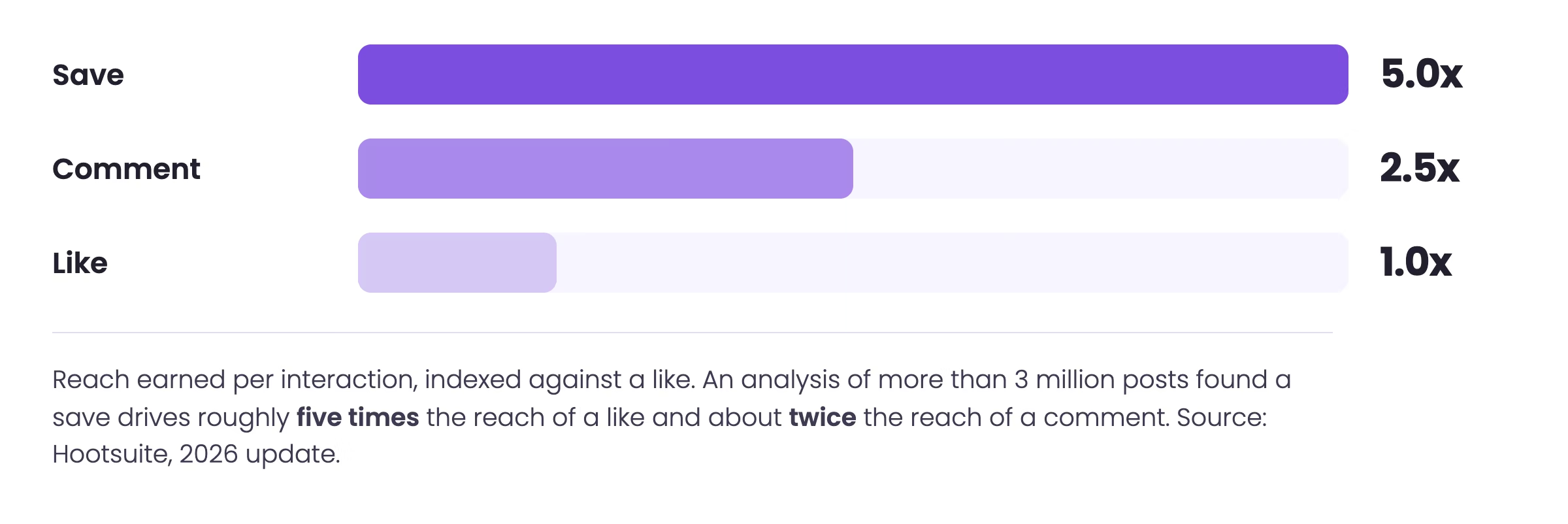
The LinkedIn algorithm in 2026 is a single AI model that reads your post and your profile together, then ranks that post through four stages on relevance and depth of engagement rather than raw likes. LinkedIn retired its older rules-based ranking in late 2025, and the replacement weighs saves and reading time far above a quick tap: an analysis of more than 3 million posts found a save carries roughly five times the reach of a like.
That one change explains most of the reach drops people reported through the year. The model decides who sees a post by topic, so an account posting across five unrelated subjects reads as hard to classify and travels less far than a smaller account with one clear lane. This guide covers what changed, how the ranking actually runs, which formats earn distribution, and the posting practices that hold up, from an agency that runs LinkedIn across client accounts every week.
TL;DR: Summary
- LinkedIn replaced its rules-based feed ranking with one AI model in late 2025. It reads your post text and your profile together.
- Ranking runs in four stages: a spam screen, a golden hour test over the first 60 to 90 minutes, a relevance match on the interest graph, then sustained distribution.
- Saves and reading time outweigh likes. A save carries about five times the reach of a like, and roughly twice the reach of a comment.
- Your profile is scanned before a post is distributed, so content outside your stated topic gets held back.
- External links in the post body or the first comment cut reach. Move them to a later comment or a direct message.
- Three to five posts a week in one topic lane beats daily volume. That cadence is the base of every LinkedIn ghostwriting program we run.
What is the LinkedIn algorithm in 2026?
The LinkedIn algorithm is the recommendation system that decides which posts appear in each member's feed. It screens billions of posts against what a person has read, engaged with and told the platform they care about, then serves the small slice most likely to be relevant. With well over a billion members, the volume it filters is enormous, and in 2026 the machine doing that filtering changed shape.
The 2026 version reads your content the way a person would. It parses the words in your post, compares them against your profile and your posting history, then decides who in the wider network would find it relevant. Your connections still carry the first wave of distribution, and the topic you own decides how far the post can travel past them.
What changed in the LinkedIn algorithm for 2026?
The changes are structural rather than cosmetic, which is why advice written before 2026 now misfires. Six shifts decide whether your content gets seen this year.
| What changed | Old system | 2026 model |
|---|---|---|
| Ranking engine | Rules-based scoring layered over engagement counts | One AI model that reads post text and profile together |
| Targeting basis | Relationship graph, meaning who you know | Interest graph, meaning what you consistently talk about |
| Top signal | Likes and early engagement volume | Saves, reading time and multi-sentence comments |
| Profile role | Mostly a landing page after the click | Scanned before distribution to place your topic |
| External links | Reduced reach, widely worked around via first comment | Reduced reach in the body and the first comment alike |
| AI content | Largely undetected | Generic phrasing held back, specific first-hand detail rewarded |
Put together, the platform now favors depth over breadth. Accounts that win in 2026 are the ones a machine can categorize in seconds: a tight topic, a profile that matches it, and posts that make a reader stop, finish and save. Broad posting, engagement pods and recycled AI copy all cost distribution now, and reach declines quietly even while impression counts look normal.
How does the 2026 LinkedIn algorithm rank your post?
The ranking still runs in stages, and each one got sharper. Knowing the order tells you exactly where a post lives or dies.
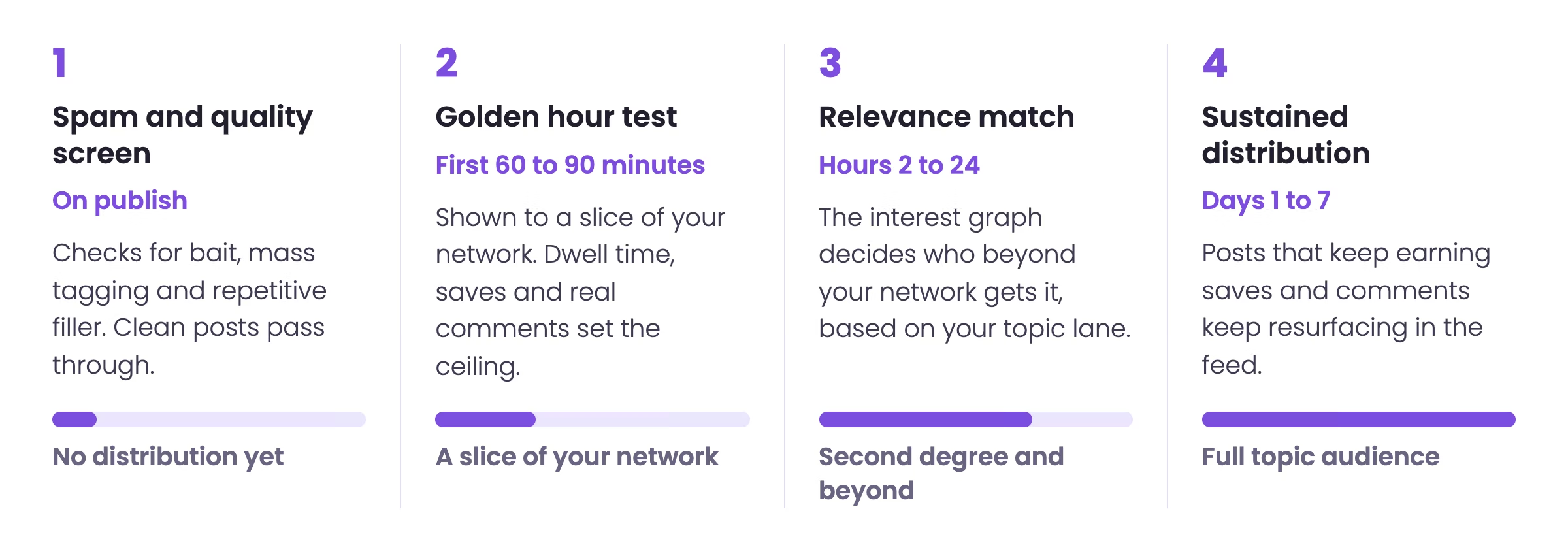
Stage one, the spam and quality screen. The model checks whether the post is clear of the obvious patterns: artificial engagement, like-and-share solicitations, mass tagging and repetitive filler. Clear violations get filtered, borderline cases can go to human review, and only clean content moves on.
Stage two, the golden hour test. The post goes to a slice of your network, and the platform watches the first 60 to 90 minutes. Reading time, saves and thoughtful comments in that window tell the model whether to widen distribution. Replying to every early comment yourself, quickly, still moves the needle more than any other single tactic.
Stage three, the relevance match. Using the interest graph, the model works out who beyond your immediate network would find the post valuable, based on its topic, your authority on that topic and each viewer's own interests. A post tightly matched to a clear niche reaches the right second-degree audience. A scattered post stalls with your existing followers.
Stage four, sustained distribution. Posts that keep earning meaningful engagement over hours and days keep getting shown. LinkedIn content has a longer shelf life than most platforms, so a post that resonates can resurface days later, which rewards depth over a quick spike.
Which signals does the LinkedIn algorithm weigh most in 2026?
The ranking model reads several signals at once, and their relative weight is where most 2026 advice goes stale. Saves and reading time now sit at the top.
| Signal | How it counts in 2026 | What to do | Source |
|---|---|---|---|
| Saves | Among the strongest positive signals, about 5x the reach of a like | Post frameworks, checklists and specific data worth keeping | Hootsuite, 2026 |
| Dwell time | Reading time is tracked after the see more click | Write a hook that earns the click and a post worth finishing | Hootsuite, 2026 |
| Comments | Multi-sentence replies count far above one-word reactions | Ask one specific open question and reply within the hour | SocialBee, 2026 |
| Golden hour | First 60 to 90 minutes set the distribution ceiling | Publish when your audience is active and stay to reply | SocialBee, 2026 |
| Likes | Downweighted against saves and comments | Useful as a floor, never the target | Hootsuite, 2026 |
| External links | Reduce reach in the body and the first comment | Move the link to a later comment or a direct message | Sprout Social, 2026 |
| Profile match | Off-topic posts get held back before they spread | Keep headline, About and posts in one topic lane | Sprout Social, 2026 |
Which content formats get the most reach on LinkedIn in 2026?
The single model handles every format, and the differences come from how much attention each one holds. Formats that keep somebody on the post win, because reading time feeds straight back into the ranking.
| Format | Reach in 2026 | Best use |
|---|---|---|
| Document carousel | Strongest, because swiping registers as sustained reading time | Frameworks, teardowns and checklists worth saving |
| Native video | Strong, with captions and a hook inside the first two seconds | Short lessons, product walkthroughs, founder takes |
| Text post | Strong when the first two lines earn the see more click | Opinion, story and specific first-hand numbers |
| Single image | Middle of the pack, useful as a visual anchor | One chart or one screenshot supporting a text post |
| Poll | Fallen sharply, low value distribution | Rarely worth the slot in 2026 |
| Link post | Held back, whether in the body or the first comment | Put the link in a later comment instead |
Why does LinkedIn scan your profile before it distributes a post?
This is the least understood change of 2026, and it explains reach drops that look inexplicable otherwise. Before the model decides who should see a post, it reads your headline, your About section and your work history to work out what you are an authority on. A post that sits inside that lane gets matched to people interested in the topic. A post that sits outside it has no obvious audience to match against, so distribution narrows.
The practical fix is alignment rather than keyword stuffing. Your headline should name the problem you solve, your About section should cover the same ground as your posts, and your posts should stay inside two or three themes. If you have spent a year posting about hiring and want to move to demand generation, expect a few weeks of softer reach while the model reclassifies you. Our guide to LinkedIn personal branding for founders walks through the fields that carry the most weight, and LinkedIn personal branding for founders covers choosing the lane itself.
The banner is part of what that scan sees, so it is worth picking a layout from best LinkedIn banner ideas.
When is the best time to post on LinkedIn in 2026?
Timing decides how many people are around for the golden hour test, which sets the ceiling on a post rather than its quality. Mid morning Tuesday through Thursday remains the reliable default for B2B audiences, with a second workable window in the late afternoon as people clear their day.
Treat any published time as a starting hypothesis. Audience habits vary by industry, seniority and region, and a founder selling to APAC operations leads has a different active window than one selling to US marketing teams. Post at a consistent time for two or three weeks, read your own analytics, then adjust. We break the testing method down in our guide to the best time to post on LinkedIn for B2B.
How often should you post on LinkedIn in 2026?
Three to five posts a week is the range that builds familiarity without splitting your own distribution. The model avoids showing one feed several posts from the same author in quick succession, so posting twice a day usually means the second post competes with the first rather than adding to it.
Consistency inside one topic lane matters more than frequency. An account that posts three times a week for six months on the same subject accumulates topic authority the model can act on. An account that posts daily across six subjects never gives it a stable signal to work with.
What are the 3/2/1 and 95-5 rules on LinkedIn?
Two shorthand rules come up constantly, and both are planning heuristics rather than ranking factors. Neither was published by LinkedIn.
The 3/2/1 rule is a weekly mix: three posts of practical value, two carrying a point of view, and one personal or behind the scenes. It stops an account from becoming either a tips feed or a diary. Use it until your own analytics tell you which topics earn saves, then let that data set the ratio.
The 95-5 rule comes from B2B marketing research and holds that around 95 percent of your buyers are out of market at any given moment, while 5 percent are actively looking. It argues for content that builds recognition with the 95 percent instead of running offers only at the 5 percent, so you are already familiar when a buyer does enter the market. That logic is why organic presence and outbound work better together than either does alone.
How do you beat the LinkedIn algorithm in 2026?
Nothing here is a trick. Each move maps to a signal the model measures, which is why they keep working as the ranking shifts.
1. PICK ONE LANE
   Two or three themes, no more. Match your headline and About
   section to them before you post again.

2. WRITE A HOOK THAT COSTS A CLICK
   The first two lines are all anyone sees. Open with a specific
   claim, a number, or a situation. No throat-clearing.

3. MAKE IT WORTH SAVING
   Frameworks, checklists, teardowns, real numbers. Ask yourself
   whether a reader would want this again in three weeks.

4. KEEP LINKS OUT OF THE POST
   No link in the body, no link in the first comment. Offer it in
   a later comment or by direct message.

5. PUBLISH INTO A LIVE ROOM
   Post when your audience is online, then stay for 60 minutes
   and reply to every comment with more than one sentence.

6. ASK ONE REAL QUESTION
   One specific, open question at the end. Not "thoughts?" and
   never "comment YES if you agree".

7. HOLD THREE TO FIVE A WEEK
   Same lane, same cadence, for at least eight weeks before you
   judge whether it is working.
The pattern behind all seven is that the model rewards evidence a real person found the post worth their time. For worked examples of posts built this way, see our breakdown of LinkedIn posts that get leads.
Which LinkedIn algorithm myths still cost people reach?
Most of the advice circulating in 2026 was written for a ranking system that no longer exists. These are the ones that actively cost distribution.
| The myth | What actually happens |
|---|---|
| Engagement pods lift reach | Coordinated engagement is a spam pattern the quality screen looks for. It suppresses the account rather than lifting the post. |
| Put the link in the first comment | The first comment now carries the same reach reduction as the body. Use a later comment or a direct message. |
| Post daily for maximum reach | Several posts a day split your own distribution. Three to five focused posts a week outperform daily volume. |
| Editing a post kills it | Fixing a typo does not affect reach. Adding an external link after publishing still triggers the link reduction. |
| The exact minute decides everything | Timing sets how many people see the golden hour test, nothing more. A weak post at a perfect time still stalls. |
| Hashtags expand your reach | Hashtags carry little ranking weight in 2026. The words in the post itself are what the model reads for topic. |
| More connections means more reach | Distribution follows topic relevance. A focused audience of 2,000 can outperform a scattered 20,000. |
Is LinkedIn still worth the effort in 2026?
Reach per post is lower than it was two years ago, and that has led plenty of people to ask whether the channel still earns its slot. For B2B the answer holds up, because the audience arrives in a professional context and buying committees research there before they ever fill in a form.
The return has moved from impressions to audience quality. A narrow topic lane attracts fewer readers and a far higher share of the right ones, which is what makes the channel work as the front end of an outbound motion rather than as a popularity contest.
How do you measure whether the algorithm is working for you?
Impressions are the metric LinkedIn shows you first and the one that tells you least. Because the 2026 model ranks on depth, the numbers worth tracking are the ones that show somebody stayed, kept the post, or started a conversation. Track them weekly as ratios rather than raw counts, so a single post that travels does not distort the trend.
| Metric | How to read it | Healthy direction |
|---|---|---|
| Saves per impression | The clearest proxy for the strongest ranking signal | Rising, even if impressions stay flat |
| Comments per impression | Counts real conversation, not one-word replies | Rising, with multi-sentence replies |
| Profile views per post | Shows the post sent people to check who you are | Rising alongside a consistent topic lane |
| Follower quality | Share of new followers who match your ICP | Rising share, even at a lower follower count |
| Conversations started | Direct messages and replies traceable to a post | The number that actually predicts pipeline |
| Impressions | Ceiling indicator only, easily distorted by one post | Stable is fine when the ratios above are climbing |
A useful habit is to review the trailing four weeks rather than any single post. One post reaching 40,000 people means little when none of them match your ICP, while a post reaching 3,000 of the right accounts and starting nine conversations is doing the job the channel exists for.
How do you turn LinkedIn reach into pipeline?
Reach on its own is a vanity metric. The reason the algorithm matters for a B2B company is that a strong presence warms the exact buyers you later contact. Every post produces a quiet list of people who read, saved or commented, and that is intent you can act on while it is fresh, usually within a two to four week window.
The sequence that works is deliberate. Feed engagers into a clean prospect list, send an empty connection request, follow with a short specific question a day or two after they accept, then run four to five touches across two to four weeks. When somebody already recognizes you from the feed, every step of that sequence performs better than it does cold. The full structure lives in our LinkedIn outreach playbook, the targeting logic behind it in our guide to signal-based outbound, and the wider channel strategy in how to generate B2B leads on LinkedIn.
The tooling matters less than the targeting and the offer. Whichever platform you run the LinkedIn layer through, and we compare the current options in our roundup of the best LinkedIn automation tools, the content earns the attention and the sequence turns it into booked meetings.
This is the model we run for clients. For Primal, signal-based campaigns across email and LinkedIn produced more than 85 qualified leads in six months, six closed deals, a 35 percent reduction in customer acquisition cost and a 4.57x return, with an 8 percent positive reply rate across campaigns. For The Great Room, the same approach took meetings from roughly two per quarter to two per month and closed more than $250K in contract value inside about nine months. Our LinkedIn outreach team runs that outreach layer alongside the content.
Turn your LinkedIn reach into booked meetings
We shape the founder voice into a steady LinkedIn presence, then run the multichannel outbound behind it across cold email, LinkedIn and cold calling, so the people who engage with your content end up on your calendar. You stay the voice and the closer.
See how LinkedIn ghostwriting works
LinkedIn algorithm FAQ
What is the LinkedIn algorithm in 2026?
The LinkedIn algorithm in 2026 is a single AI model that reads your post text and your profile together, then ranks the post on relevance and depth of engagement. It replaced the older rules-based ranking in late 2025. The practical difference is that what you consistently talk about now decides how far a post travels, where the old system leaned more heavily on who you were connected to.
How does the LinkedIn algorithm work now?
It runs in four stages. A spam and quality screen filters bait and filler, a golden hour test shows the post to a slice of your network across the first 60 to 90 minutes, a relevance match uses the interest graph to find people beyond your network, then sustained distribution keeps resurfacing posts that hold up. Saves, reading time and real comments widen a post. Likes, outbound links and off-topic content hold it back.
Why did my LinkedIn reach drop in 2026?
The most common cause is a topic mismatch. The model scans your profile to decide what you are about, so posting across several unrelated subjects makes you harder to classify and narrows distribution. The other frequent causes are external links in the post body, engagement bait phrasing, and generic AI copy, all of which the 2026 model holds back.
How do you beat the LinkedIn algorithm in 2026?
Pick one topic lane, make your profile headline and About section match it, and write posts worth saving. Open with two lines that earn the see more click, keep links out of the body, reply to every comment inside the first hour, and post three to five times a week. Depth in a narrow lane is what the model rewards.
Which content format gets the most reach on LinkedIn in 2026?
Document carousels and native video lead, because swiping and watch time both register as reading time. Strong text posts with a real hook still travel well and often produce the longest dwell time of any format. Polls have fallen sharply, single images sit mid pack, and posts with an external link in the body are held back.
When is the best time to post on LinkedIn in 2026?
Mid morning on Tuesday through Thursday remains the reliable default for B2B, with a second window in the late afternoon. Timing only sets how many people are around for the golden hour test, so it raises the ceiling on a good post rather than rescuing a weak one. Test your own audience for two or three weeks before settling on a slot.
Do external links still hurt LinkedIn reach in 2026?
Yes. A link in the post body or the first comment reduces distribution, because the platform prefers to keep people on the feed. Put the link in a later comment, or offer to send it by direct message when someone asks. Native formats such as documents and video outperform link posts by a wide margin.
How often should you post on LinkedIn?
Three to five times a week suits most B2B founders and operators. Posting several times a day splits your own distribution, because the model avoids flooding one feed with the same author. Consistency inside a single topic lane matters more than raw volume, and one post worth saving beats five worth scrolling past.
What is the 3/2/1 rule on LinkedIn?
The 3/2/1 rule is a weekly posting mix: three posts of practical value, two that carry a point of view, and one personal or behind the scenes post. LinkedIn never published it, so treat it as a starting cadence rather than a ranking factor. Once you can see which of your own topics earn saves, let that data set the mix instead.
What is the 95-5 rule on LinkedIn?
The 95-5 rule comes from B2B marketing research and holds that roughly 95 percent of your buyers are not in market at any moment, while only 5 percent are. On LinkedIn it argues for content that builds recognition with the 95 percent rather than only running offers at the 5 percent, so you are already familiar when a buyer does enter the market.
What is the golden hour for LinkedIn posts?
The golden hour is the first 60 to 90 minutes after publishing, when LinkedIn shows the post to a slice of your network and reads the response. Dwell time, saves and thoughtful comments in that window set the ceiling for everything after it. Reply to early comments as they land, and avoid adding an external link while it is running.
What is a good engagement rate on LinkedIn in 2026?
For B2B company pages, 2 to 4 percent of impressions is a healthy band and anything above 5 percent is strong. Personal profiles usually run higher than company pages. Track saves and comments per impression alongside the headline rate, since those are the signals the 2026 model actually weighs.
Does the LinkedIn algorithm penalize AI written posts?
The model holds back generic AI phrasing rather than AI assistance itself. Posts that read as templated, with no specific detail, no numbers and no personal experience, get less distribution. Using AI to draft and then rewriting in your own voice with concrete detail does not carry a penalty.
Is LinkedIn still worth the effort in 2026?
For B2B it remains the highest intent organic channel, because the audience arrives in a professional context and buying committees research there. Reach per post is lower than it was, so the return now comes from the quality of the audience a narrow topic lane attracts rather than from impression counts.
Recommended service
LinkedIn Ghostwriting
Reachly writes and runs your LinkedIn presence so your profile builds authority and brings in inbound B2B leads.